

Johnny Asked for a Clone Wins Parent and Teacher Choice Award From HowToLearn.com
Gold Medal Winner
Books, Critical Thinking, Creative Thinking, Cause and Effect, Decision-Making and Early Childhood Education
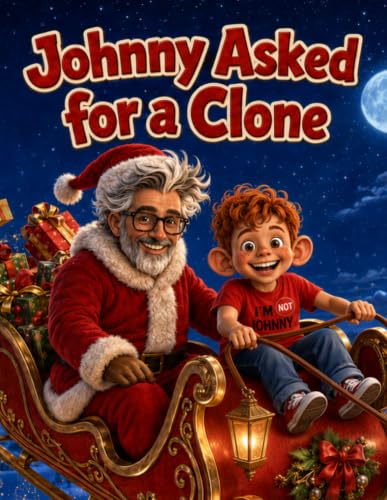
Johnny Asked for a Clone begins with one wonderfully imaginative wish and transforms it into a memorable exploration of choices, consequences and the importance of thinking beyond what we want at this very moment.
By asking what might happen if Santa gave children exactly what they requested, Professor ANT creates a playful thought experiment that encourages young readers to predict, question and reconsider.
The book recognizes that critical thinking often begins when children are given permission to imagine the impossible and then examine what could happen next.
Funny, surprising and full of opportunities for conversation, Johnny Asked for a Clone gives parents and teachers an original way to strengthen reasoning without making learning feel like an assignment.
🧠 Johnny Asked for a Clone Builds Critical Thinking
Children frequently make requests based on what sounds exciting right now. Professor ANT uses that natural childhood enthusiasm as the starting point for deeper thinking.
Johnny’s wish for a clone initially sounds clever and entertaining. The premise quickly invites children to consider questions that reach beyond the request itself. What would a clone actually do? Would it always agree with Johnny? Would two Johnnys make life easier, or would they create entirely new problems?
Children begin predicting possible outcomes and discovering that an appealing idea can have consequences they did not anticipate. This process develops several essential critical-thinking skills:
- Predicting what could happen next
- Examining possible consequences before making a decision
- Considering benefits and disadvantages
- Looking at a situation from more than one perspective
- Comparing expectations with possible reality
- Revising an opinion when new possibilities emerge
- Explaining the reasons behind a conclusion
The book does not require children to arrive at one predetermined opinion. It gives them an imaginative situation and invites them to think it through.
Related resource: Discover 6 Questions to Build Critical Thinking Skills in Children.
📚 Johnny Asked for a Clone Book Overview
Johnny Asked for a Clone is a full-color illustrated children’s book that explores what might happen when Santa gives a child exactly what he asks for.
That intriguing premise immediately captures attention. Many children have imagined having a double who could complete chores, attend school, play games or take over an unwanted responsibility. Professor ANT takes that familiar fantasy and turns it into a thoughtful investigation.
The book encourages young readers to move beyond the first exciting idea and consider the practical, emotional and sometimes unexpected results. Children must think about identity, responsibility, fairness and whether getting exactly what they want always produces the outcome they imagined.
Its large 8½-by-11-inch size, colorful illustrations and 46-page format create an inviting read-aloud experience for homes and classrooms.
💭 An Imaginative Wish Becomes a Thought Experiment
One of the most valuable qualities of Johnny Asked for a Clone is its use of imagination as a path to reasoning.
Children do not need technical knowledge about cloning to participate. They can begin with a simple hypothetical question: “What if there were another person exactly like me?” From there, the possibilities multiply.
A child might initially imagine that a clone would make life easier. Another child might immediately anticipate arguments, confusion or competition. Both responses provide valuable insight into how children approach a problem.
Parents and teachers can ask children to identify their assumptions. Would the clone have the same thoughts? Would it want the same toys? Would it make different choices? How would other people know which Johnny was which?
These are entertaining questions, but they also encourage flexible thinking, perspective-taking and cause-and-effect reasoning.
🌟 Johnny Asked for a Clone Learning Benefits
- Encourages children to think before making a decision
- Develops prediction and cause-and-effect reasoning
- Shows that an exciting idea can have unexpected consequences
- Strengthens creative and flexible thinking
- Invites children to compare different possible outcomes
- Encourages children to explain and defend their opinions
- Creates opportunities to discuss individuality and responsibility
- Supports reading comprehension and oral-language development
- Transforms imaginative play into meaningful learning
- Provides an enjoyable, screen-free discussion experience
😊 Why Children Love Johnny Asked for a Clone
The idea of having a clone is instantly intriguing. Children can imagine another version of themselves going to school, doing chores, sharing toys or creating twice as much fun.
They also enjoy deciding whether Johnny’s request is brilliant, troublesome or a little of both. The premise gives children room to make predictions that may be funny, surprising or completely different from an adult’s response.
Because the story begins with an extraordinary wish, children become personally involved. They naturally begin wondering what they would ask Santa for and whether receiving it would work out exactly as planned.
👨👩👧 Why Parents Love Johnny Asked for a Clone
Parents will appreciate the way Johnny Asked for a Clone creates thoughtful conversations without sounding like a lecture.
The book opens the door to discussions about wants, choices and responsibility. It can help children consider why adults sometimes ask them to think before deciding and why getting everything they request may not always be best.
Parents can also learn a great deal by listening to their child’s predictions. One child may focus on avoiding chores, while another may think about friendship, fairness or sharing attention. Each answer gives parents a valuable glimpse into the child’s developing reasoning.
Parents will especially value:
- The unusual and memorable premise
- The emphasis on thinking through consequences
- The combination of humor and meaningful learning
- The encouragement of independent opinions
- The opportunities for family conversation
- The book’s usefulness during repeated readings
🍎 Why Teachers Love Johnny Asked for a Clone
Teachers can use Johnny Asked for a Clone to begin lessons and discussions involving prediction, cause and effect, decision-making and creative problem-solving.
Before reading further, students can predict what may happen and explain the evidence or reasoning behind their answers. Afterward, they can compare their original predictions with the possibilities raised by the story.
The book can support classroom learning in:
- Critical thinking and logical reasoning
- Prediction and reading comprehension
- Cause-and-effect relationships
- Creative writing and imaginative storytelling
- Speaking, listening and respectful discussion
- Decision-making and personal responsibility
- Comparing multiple solutions or outcomes
Students can also write or illustrate their own “What if?” stories based on a wish that produces an unexpected result.
💡 Critical-Thinking Questions for Johnny Asked for a Clone
Parents and teachers can extend the learning by asking:
- Why do you think Johnny wanted a clone?
- What did Johnny expect the clone to do?
- What could be helpful about having a clone?
- What new problems could a clone create?
- Would a clone think exactly like Johnny?
- Who would be responsible for the clone’s choices?
- What might Johnny wish for differently after thinking it through?
- Have you ever wanted something and later changed your mind?
- What would you ask Santa for, and what might happen if you received it?
These questions help children move from imagining an outcome to examining it carefully.
❤️ Why Our Award Team Loves Johnny Asked for a Clone
Our award team loves the way Professor ANT builds a meaningful learning experience around a premise children immediately understand and enjoy.
Johnny Asked for a Clone does not begin with a formal lesson about decision-making. It begins with a wish. That choice draws children into the story before they realize how much thinking they are doing.
The book respects children’s ability to consider complicated possibilities. It encourages them to imagine, predict, question and change their minds as they recognize that every choice can lead somewhere unexpected.
This is precisely the kind of book that can be enjoyed as a story and then continue working in a child’s mind long after the reading ends.
🏆 Johnny Asked for a Clone Wins Parent and Teacher Choice Award
Johnny Asked for a Clone wins the Parent and Teacher Choice Gold Award for its originality, imaginative presentation and exceptional ability to develop critical thinking through an unforgettable childhood wish.
Professor ANT turns the possibility of receiving exactly what one requests into a fascinating exploration of decisions, expectations, consequences and personal responsibility.
We enthusiastically recommend this colorful and inventive book for families, elementary classrooms, libraries and homeschool programs seeking a fresh way to encourage children to think beyond the first answer.
✍️ About Professor ANT
Professor ANT is the author name used by Anthony Tiberio, creator of the Professor ANT Method and the Discovering Awareness book series.
His books use humor, surprising questions and imaginative situations to encourage children to observe, predict, compare and explain. Rather than simply telling young readers what to think, Professor ANT invites them to participate in the discovery.
This distinctive approach helps children recognize that thinking can be playful, surprising and deeply enjoyable.
📘 Johnny Asked for a Clone Book Details
- Title: Johnny Asked for a Clone
- Series: Discovering Awareness with Professor ANT
- Author: Professor ANT, Anthony Tiberio
- Recommended ages: 4–8
- Format: Full-color illustrated paperback
- Length: 46 pages
- Size: 8½ × 11 inches
- ISBN-13: 979-8189817281
- ASIN: B0HCBJQLJB
- Publication date: July 30, 2026
- Award: Johnny Asked for a Clone Wins Parent and Teacher Choice Gold Award
Enter the Parent and Teacher Choice Awards
Do you have an outstanding educational product or service you want reviewed? Apply for the prestigious Parent and Teacher Choice Award Today and get the recognition you deserve.
